

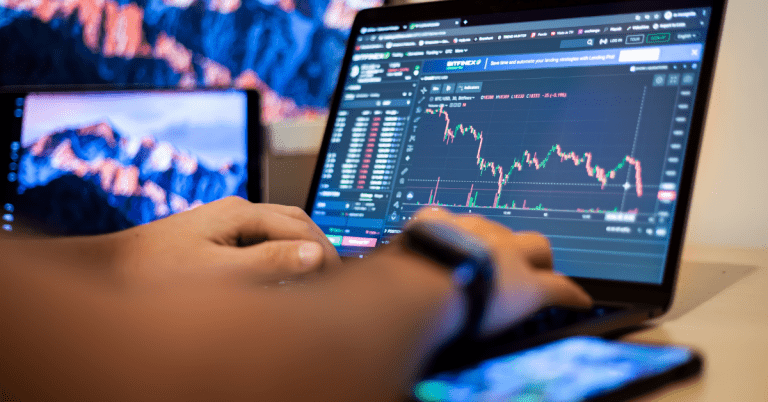
There has never been a better time to be a retail investor in India. The combination of readily available education, falling transaction costs, and the emergence of a feature-rich investing app has made the world of option trading genuinely accessible to anyone willing to put in the effort to learn. But accessibility is not the same as ease. Derivatives remain complex instruments that reward those who truly understand them and punish those who treat them carelessly. This article aims to demystify the core concepts that every serious Indian market participant should know.
What Options Actually Are and Why They Matter
An option is a settlement that gives the client the right — yet not the responsibility — to trade or sell the underlying asset before a specified date or for a specific fee. In the Indian context, an underlying asset is usually a stock, a stock index like the Nifty 50 or Nifty Bank, or a commodity. The specified interest rate is known as the strike price, and the specified date is the maturity date.
There are two types of options: call and put. A call option gives the client the opportunity to buy the underlying at the strike rate. An established option entitles the client to contribute to the underlying strike rate. The fee paid for this right is called the premium, and the mileage is determined by means of a complex interaction of underlying state-of-the-art charges, strike charges, closing times for expiration, prevailing interest charges, and underlying inherent volatility.
The Indian Options Market — Structure and Participants
The options market in India, which is largely concentrated in the securities market, is one of the most vibrant in the world by settlement breadth. The additional weekly expiration structure for the benchmark indexes has significantly broadened the buying and selling appeal by offering traders more general opportunities in certain short-term market outlooks. It has been a double-edged sword — creating more opportunities for skilled buyers, while also creating more programs for greens to make costly mistakes.
Participants in the Indian options market include male or female traders, proprietary trading desks of brokerage firms, domestic mutual funds, insurance groups, foreign portfolio buyers. Each group has different objectives and time horizons; their collective actions create pricing objectives and liquidity in options contracts for different strikes and ex just it suggest You should think about an idea of perspective and chance.
Intrinsic Value Versus Time Value — A Critical Distinction
Every option’s premium can be broken down into two components: intrinsic value and time value. Intrinsic value is the amount by which an option is in the money. A Nifty 50 call option with a strike of 22,000 when Nifty is trading at 22,500 has an intrinsic value of 500 points. A put option with the same strike would have zero intrinsic value because the market is above the strike.
Time value, on the other hand, represents the additional amount that traders are willing to pay beyond intrinsic value, reflecting the possibility that the option will become more valuable before expiry. An at-the-money option — one whose strike is exactly at the current market price — has no intrinsic value but may have significant time value, especially if there is a major event upcoming or if implied volatility is elevated. As expiry approaches, time value erodes, and this erosion accelerates sharply in the final week of a contract’s life.
Popular Strategies for Different Market Conditions
One of the most appealing aspects of options is their versatility. Unlike a simple equity position where you either gain when the market goes up or lose when it goes down, options allow you to profit from a wide range of scenarios. You can structure a trade to profit from a sharp move in either direction — this is the essence of a straddle or strangle strategy. You can profit from the market staying within a range — this is the basis of an iron condor or a butterfly spread.
For traders with a directional view, buying calls or puts remains the simplest approach. But buying naked options is a high-risk strategy because it requires not just being right about direction but also about timing and magnitude. A more risk-defined approach is to use vertical spreads — buying one option and simultaneously selling another at a different strike — which limits both potential profit and potential loss and is more forgiving of timing errors.
Premium sellers in India often favor the short strangle — selling an out-of-the-money call and an out-of-the-money put simultaneously. This strategy profits when the underlying remains between the two short strikes through expiry. The risk is significant if the market makes a large move, which is why most experienced premium sellers define their risk by turning their short strangle into an iron condor by purchasing further out-of-the-money options as protection.
Tax Implications for Options Traders in India
Understanding the tax treatment of options profits and losses is an essential part of responsible trading. In India, profits from derivatives trading are classified as business income, not capital gains. This means they are taxed at the applicable slab rate, and traders can offset their trading profits against trading losses and business expenses like brokerage, software subscriptions, and internet costs.
Traders who generate significant income from derivatives are required to file their income tax returns under ITR-3 and may also be required to get their books of accounts audited if their turnover exceeds the prescribed limits. Maintaining accurate records of all trades, including entry and exit prices, quantities, dates, and brokerage paid, is therefore not just good practice but a legal requirement. Modern trading platforms generate detailed transaction reports that simplify this process considerably.
Choosing the Right Platform for Your Trading Journey
The quality of your trading platform can significantly impact your performance. A good platform will offer fast order execution, reliable real-time data, comprehensive charting tools, options chain analysis, and risk management features like stop-loss orders and position limits. It should also be stable during high-volatility market conditions when the stakes are highest and when platform downtime can cause serious financial damage.
Beyond the technology, the quality of customer support matters. When you face an issue during market hours — a stuck order, a margin discrepancy, or a technical glitch — you need responsive support that can resolve the problem quickly. This is an aspect of the trading infrastructure that many new traders overlook until they experience a crisis, at which point its importance becomes undeniably clear.
